kiminori morishita “80 pieces of history”
ここに並ぶ服は、キミノリ モリシタの時間を遡るように配置されています。手前ほど古く、奥へ進むほど今へ近づいていきます。どんな手つきで素材に触れ、どんな迷いや執着を重ねながら、一着ずつ形にしてきたのか。その時間そのものがここに並んでいます。
ずっと変わらずに考えてきたのは、「人間と社会の関係性を布で表現すること」です。特定の場所や限られた空間でしか成立しない服ではなく、たとえば地下鉄で着られるような大衆性があり、都市の風景に自然に溶け込む、ひとつの“カモフラージュ”のような存在であること。
一方で、触れた瞬間に、服作りに携わる職人の熱量が伝わってくること。
そうした矛盾を内包した服を作り上げるために、工場と二人三脚で取り組んできました。
この現場主義こそが、キミノリ モリシタの服作りの原点であり、誰にも真似できない独自のデザインを形づくる要素になっています。
職人の手の痕跡や、作りの異常な密度をより近くでゆっくり見ていただきたい。そして、アーカイブを起点にした構造の再解釈が、時代ごとにどう変化し、現在へつながっているのか。その連続性もご覧ください。
東京時代 2003年から2005年
東京で発表を始めた初期の服には、のちのコレクションへつながる要素がすでに凝縮されています。
異素材使い、染めや擦れの表現、レザーへの複雑な加工、生地そのものを作り替える発想まで。デザイナーになったばかりの勢いのままに、手探りの実験精神とあふれる熱量が詰め込まれていました。
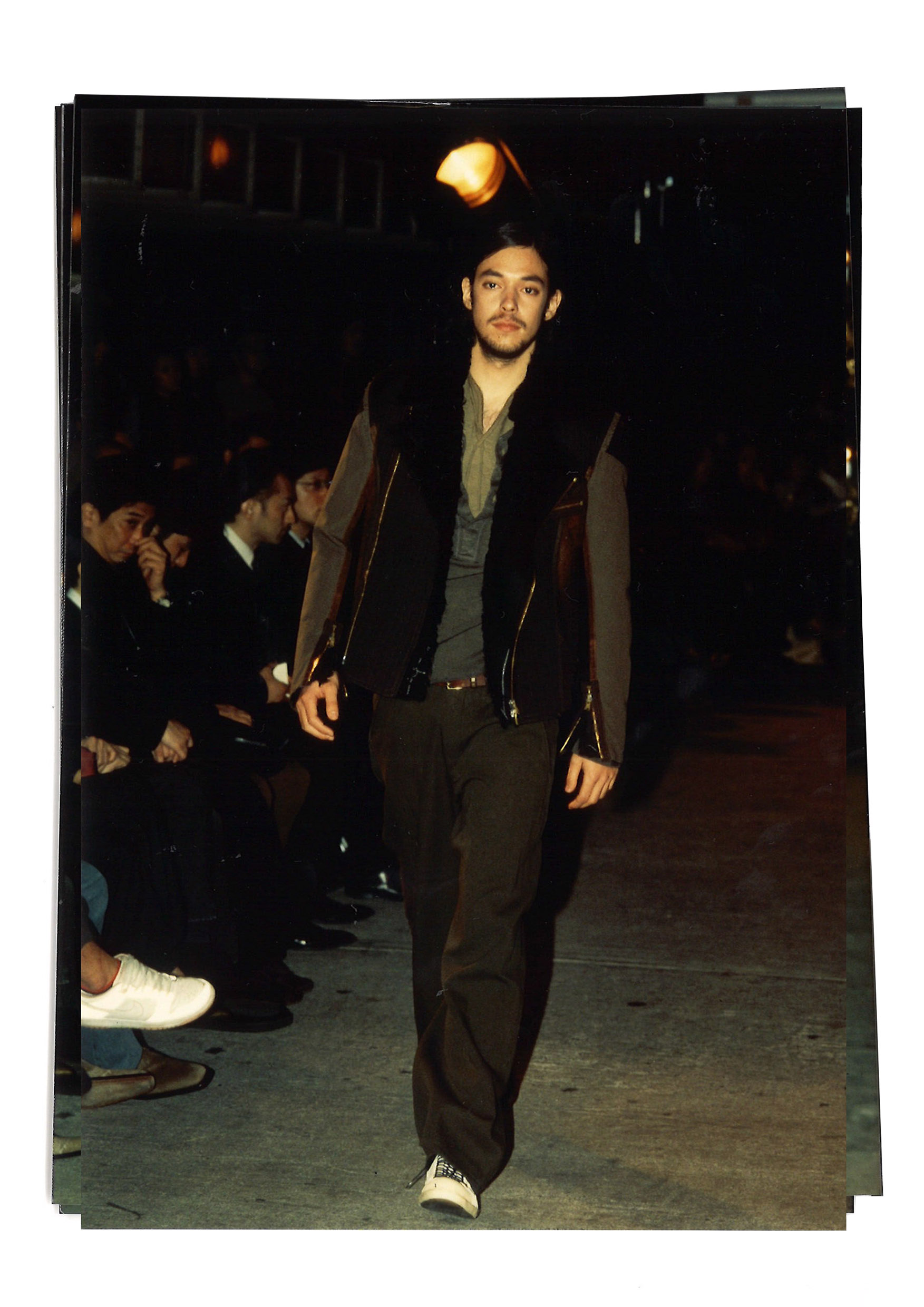
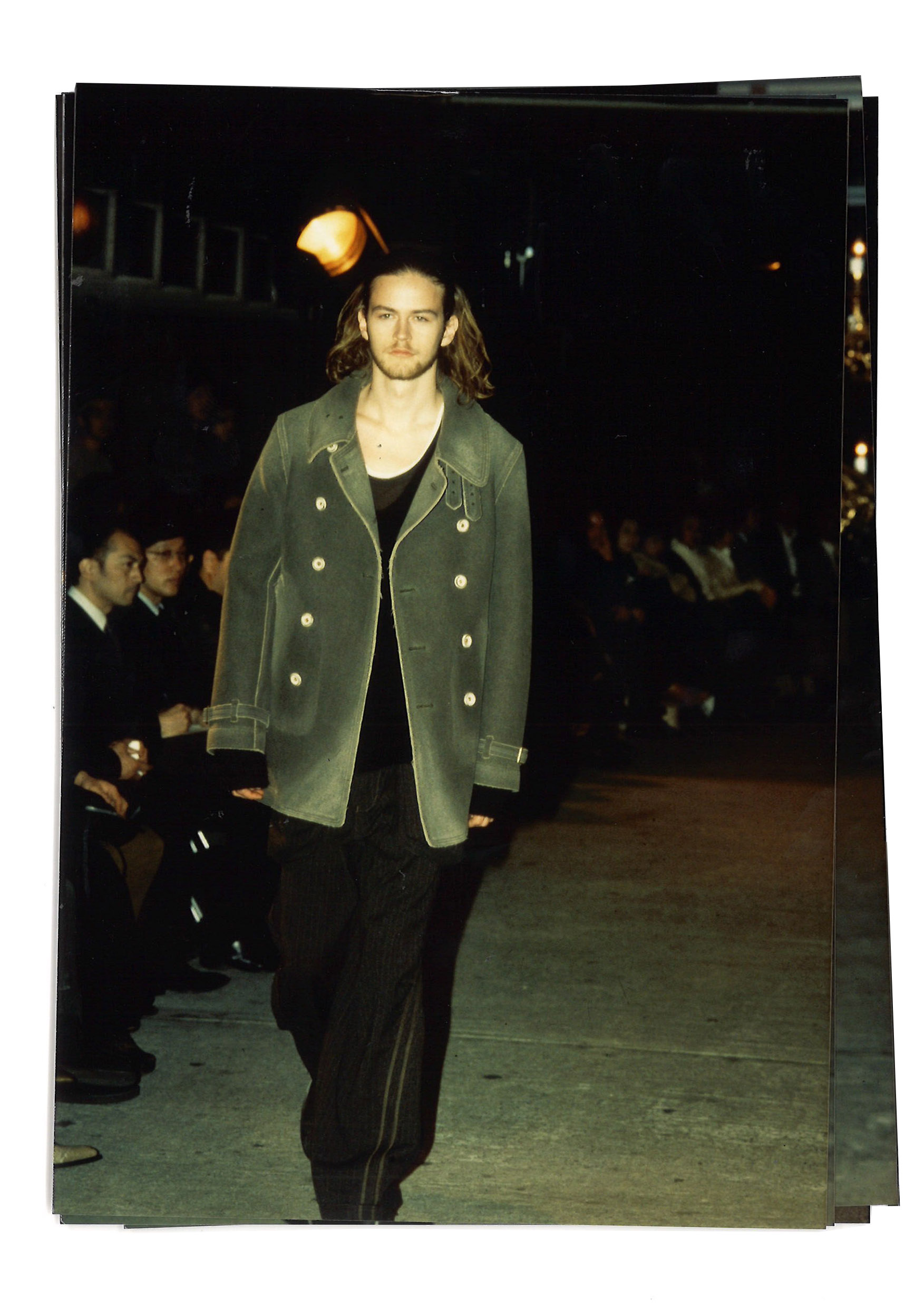
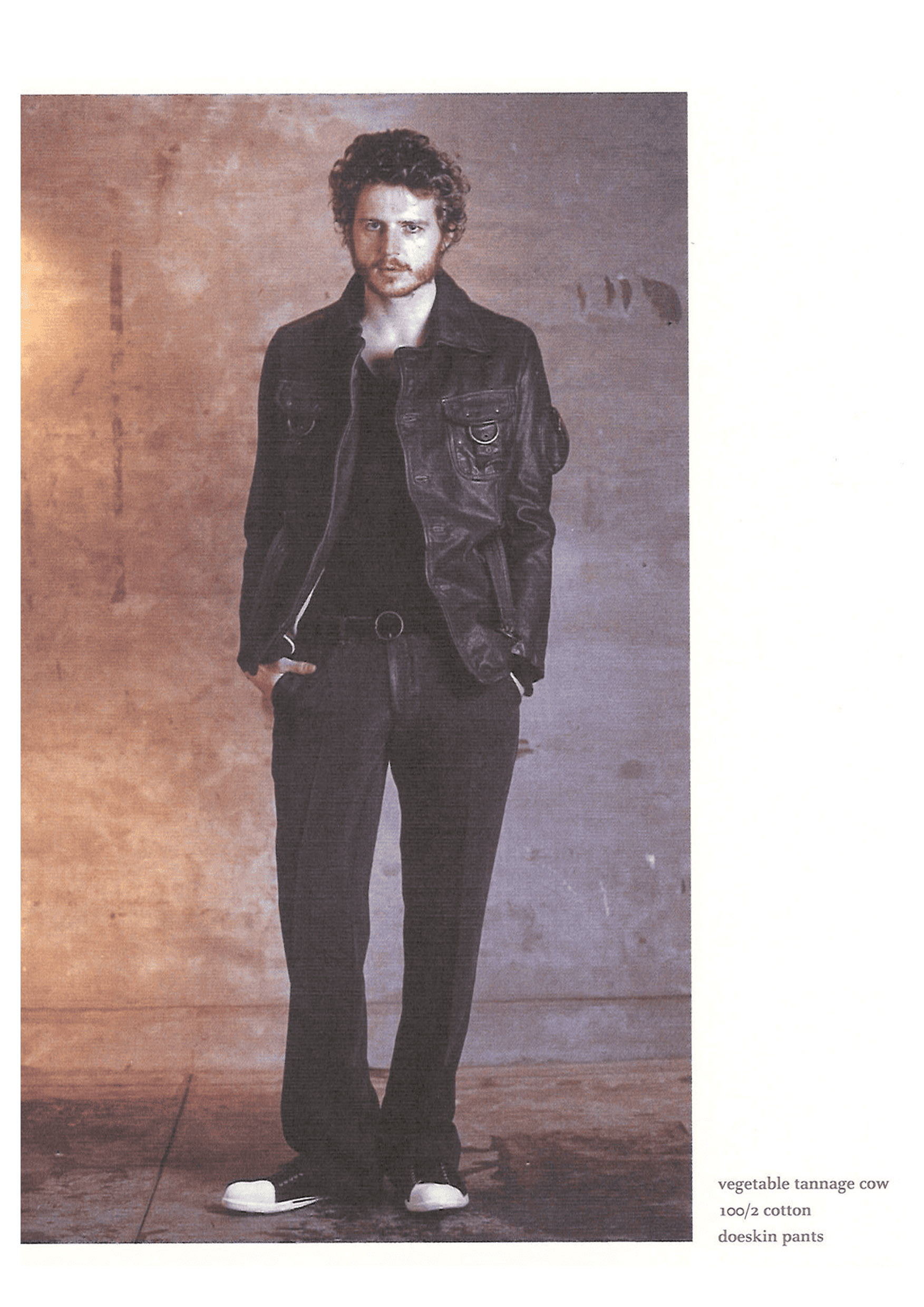
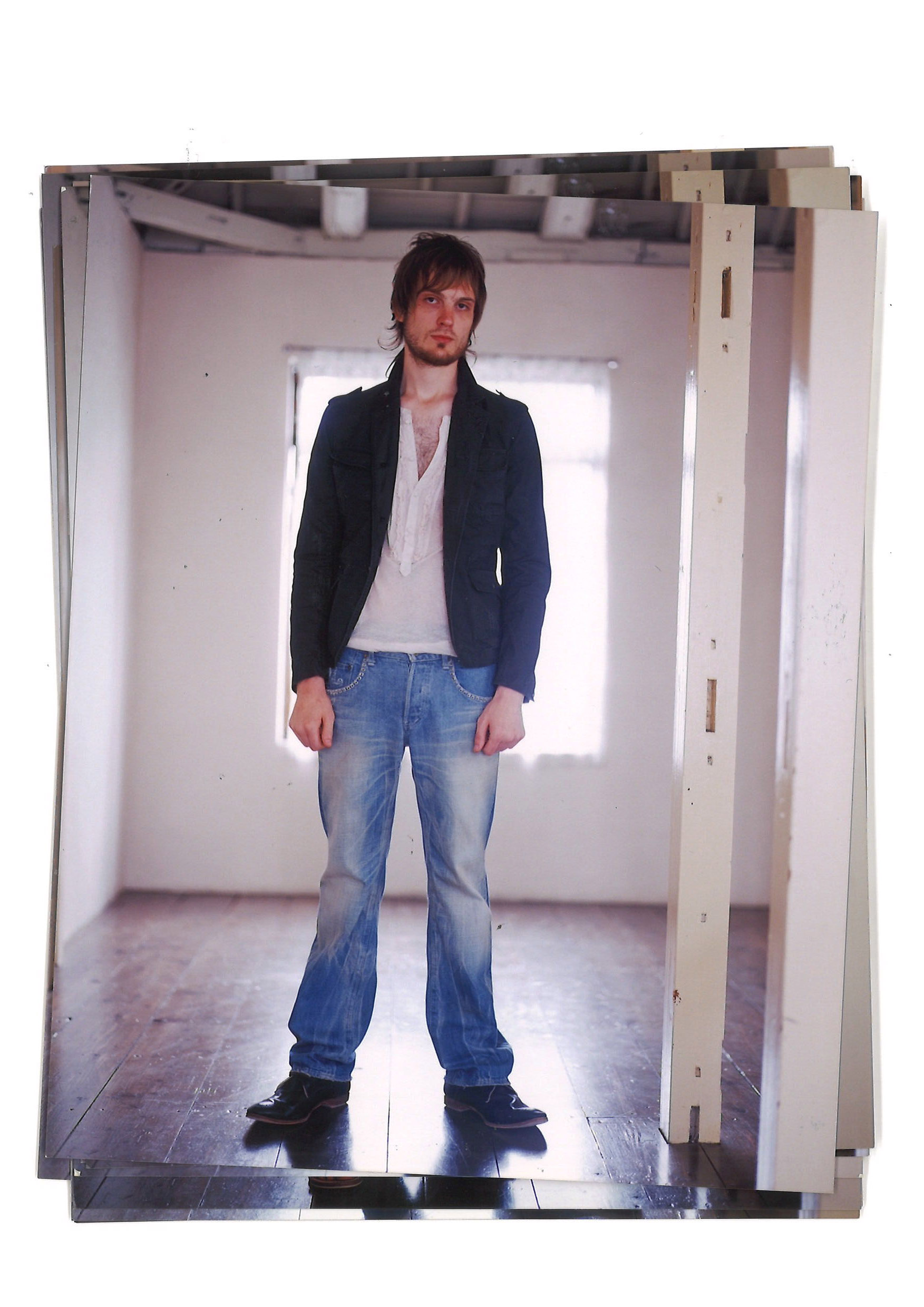
表現したかったのは、服に“新しい価値や見え方”を与えること。
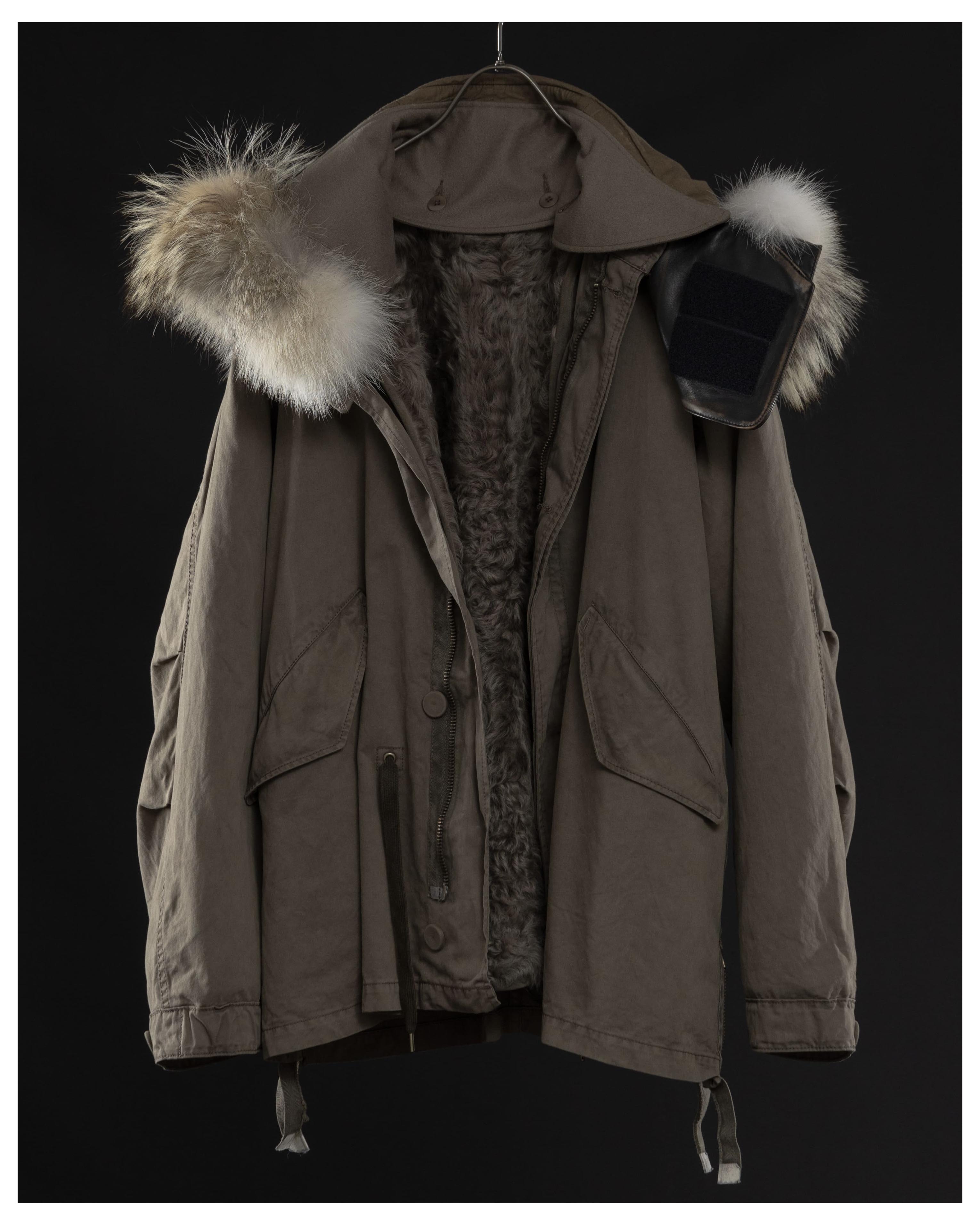
その意思は、5つの素材で切り替えたライダースジャケットにも色濃く表れています。相容れないスーツ地とレザーの共存。表に出した縫い代。カットオフの裾。取り外し式のファーライナー。一着にかける手間や試作の数は常識を遥かに超えていました。
メルトンのピーコートは、ベージュの上にさらにグレーを重ね、表面を削る。これは古着の模倣とは異なります。経年変化した服に人はなぜ愛着を持つのか。なぜそこに、その人だけの所有感が生まれるのか。その感覚を読み解き、あらかじめ内包させようとした試みです。付属の木製ボタンは一つ一つ手でペンキを塗り、擦り、さらに焼くことで、焦げたような黒さや古びたムラ感まで作っていく。
つまり経年変化は、再現ではなく、意図して設計するもの。
その考えはレザージャケットにも及びます。色を落とすことを前提に染め、狙った箇所だけを退色させることで自然な当たりを生む。さらに表面にパラフィンを吹きつけ、高温のスチームボックスに入れたあと、手作業で磨き上げる。
こうした手法は、もともと服作りの定番ではありません。どんな革で、どの厚みなら耐えられるか。また再現性を持って量産できるか。職人と試行錯誤を重ね、ゼロから開発していったものです。
デニムパンツはスタッズの下にドーナツ状の布片を挟み込み、洗うことで端がほつれたような表情を加える。
デニムジャケットは緯糸にチェーンや革紐を用いて織り込む。
発想のどれもが、異質なものとして独自の存在感を生み出しています。
削る。叩く。燃やす。染める。洗う。
いくつもの加工を重ね、見た目には時間が刻まれていても、服の品位と強度は失わない。この対比が、キミノリ モリシタを代表する作風を形づくっています。
背景には、デビュー当時から思い描いていた人物像がありました。それが、“貴族の末裔の装い”というイメージです。育ちがよくて、美意識もある。世の中に流され、酒やドラッグに溺れた時期もあったけれど、立ち直り、今は静かに暮らしている。そんな人物を思い浮かべながら、当時の服は作られていました。
そして、その“貴族の末裔”は、シーズンごとに旅に出ます。インドへ。北欧へ。ハワイへ。その土地で感じたものが、コレクションを彩るエッセンスとして入り込んでいきました。
パリ時代 2005年から2009年
発表の場をパリへ移す頃、剥き出しだった熱量はより洗練された佇まいへと変わっていきました。
生地や加工は、強い印象を残すためではなく、より高い造形美を求めるための手段になっていきます。
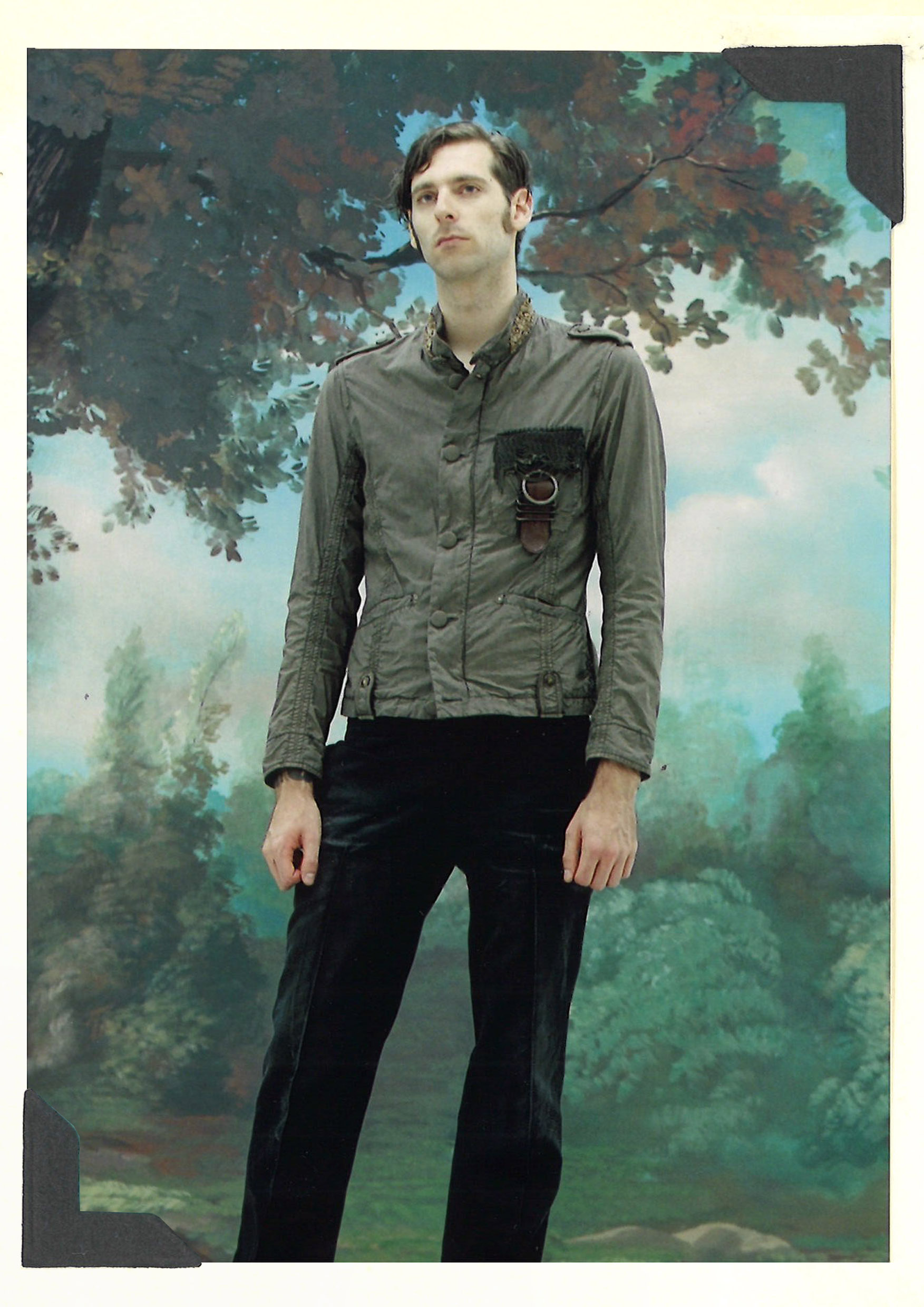
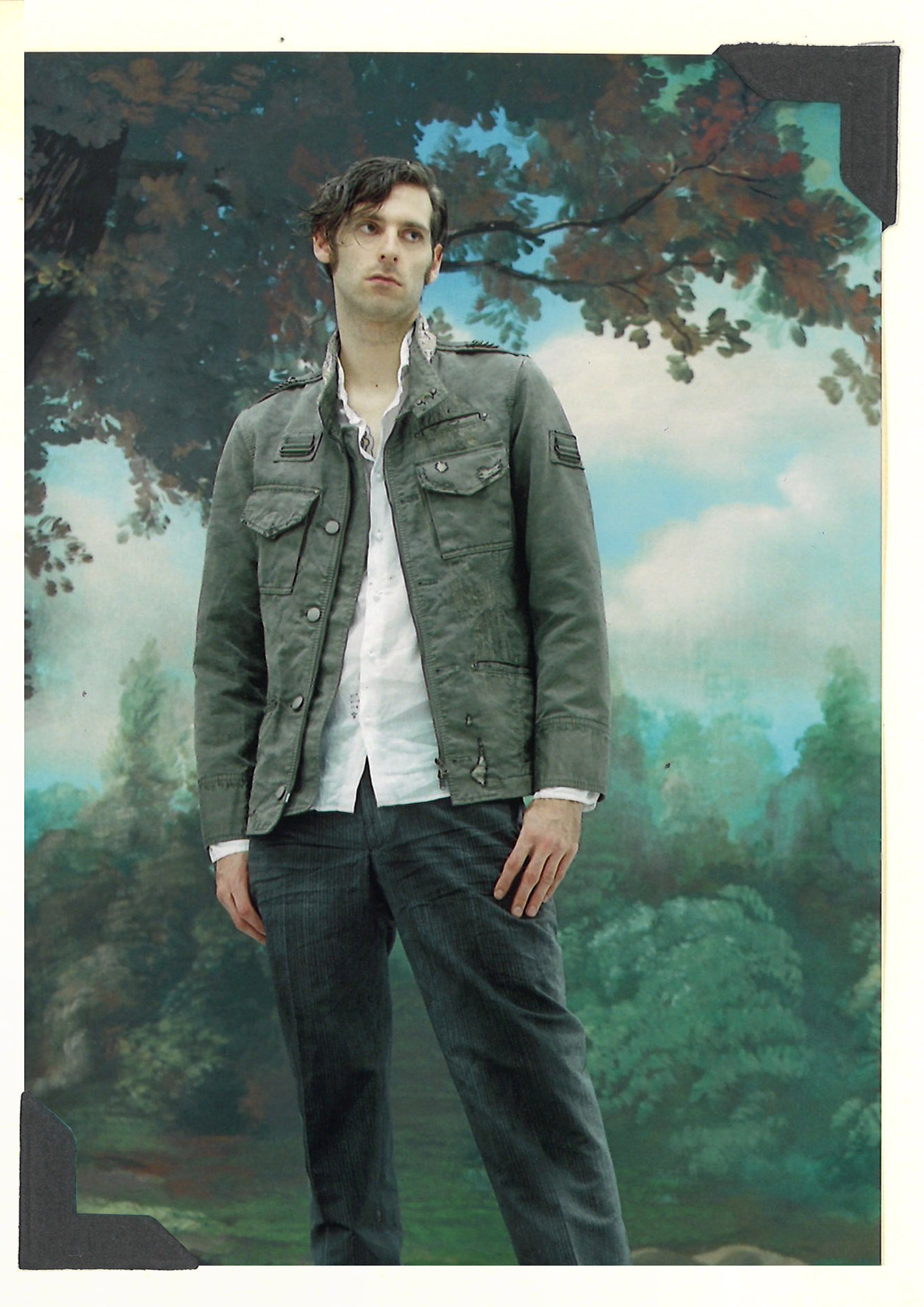
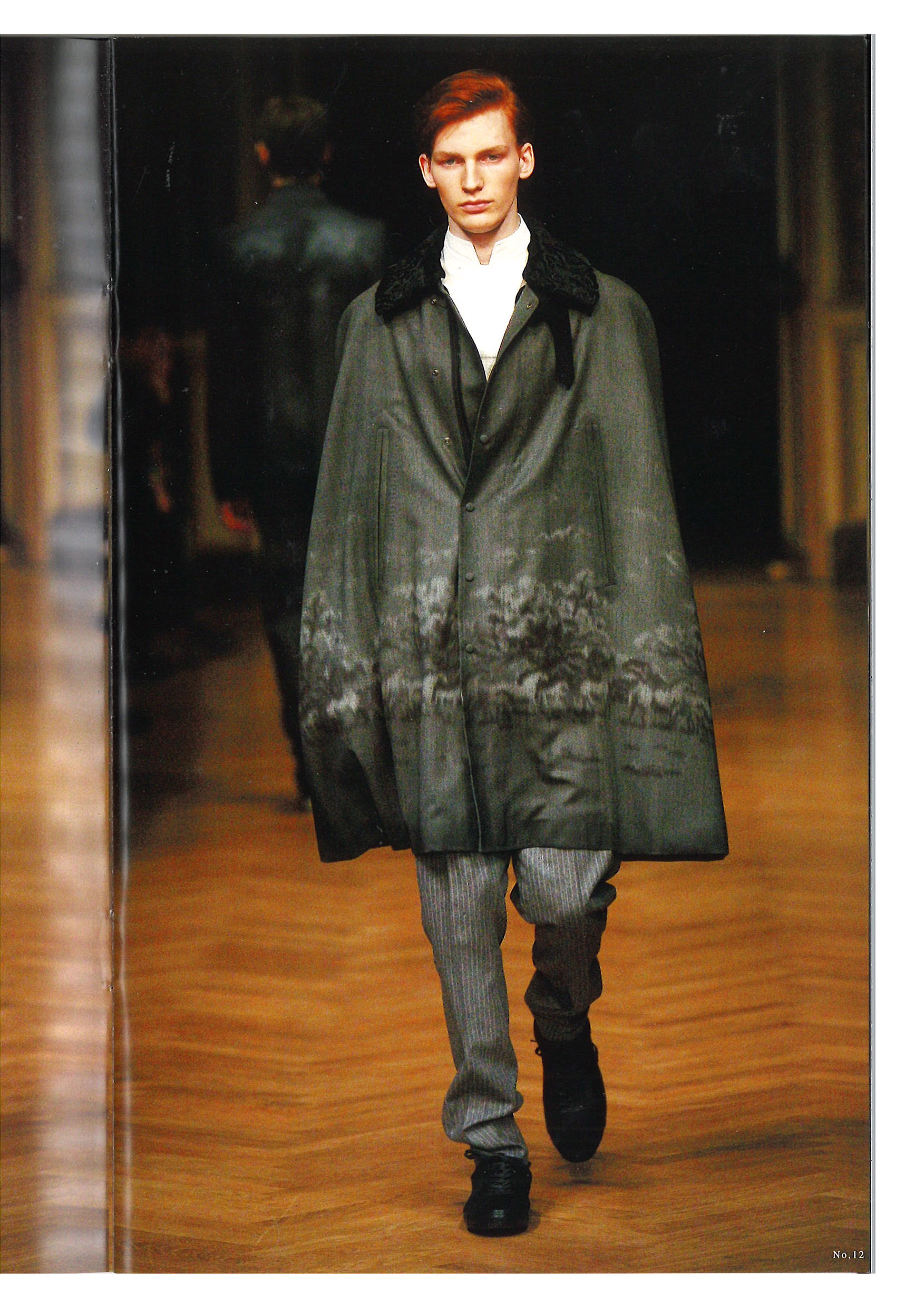
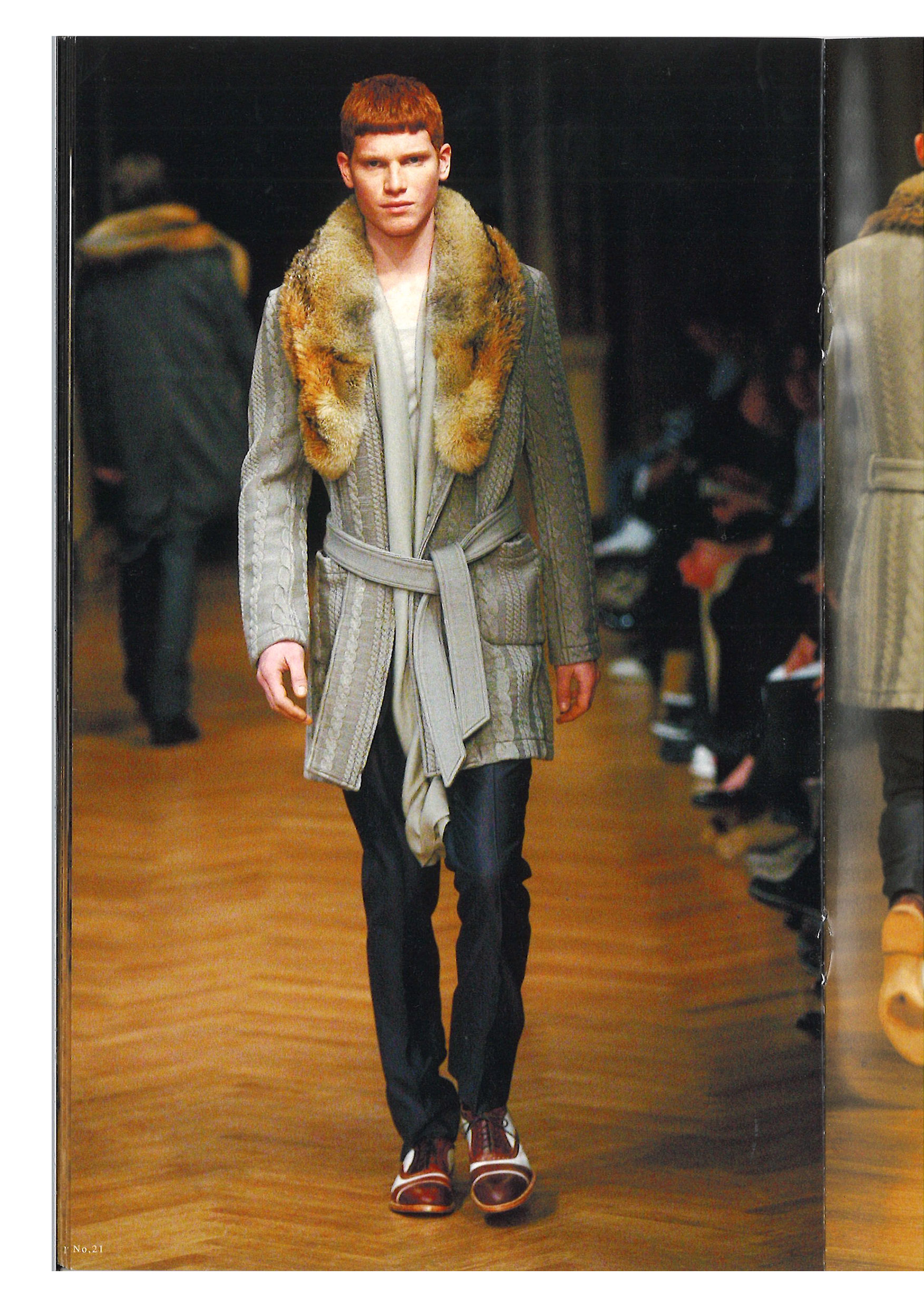
ミリタリージャケットのエスニックな刺繍も染めや加工と結びつけることで独自の表情へと変えていく。染色表現もまた、この時期から変化していきました。
象徴的なのが、スプレー加工を施したダウンジャケット。“色を落とす”発想から、逆に色を濃く見せ、人工的な陰影を与える方向へ。時間の痕跡が生まれる原理を反転させ、“経年変化”をよりモードな表情へと昇華していったのです。
ニットジャケットでは、布帛をニードルパンチで結合することで、難しかった縫製を可能にし、デザインの境界を押し広げていきました。
東京で生まれたクラフトマンシップと、パリで広がった世界観。二つが重なり、表現の奥行きはさらに増していきました。
同時にこの頃は、一点ごとに生地を開発し、技術もデザインも惜しみなく注ぎ込むことで、極めて密度の高い服作りが実現していた時代でもありました。
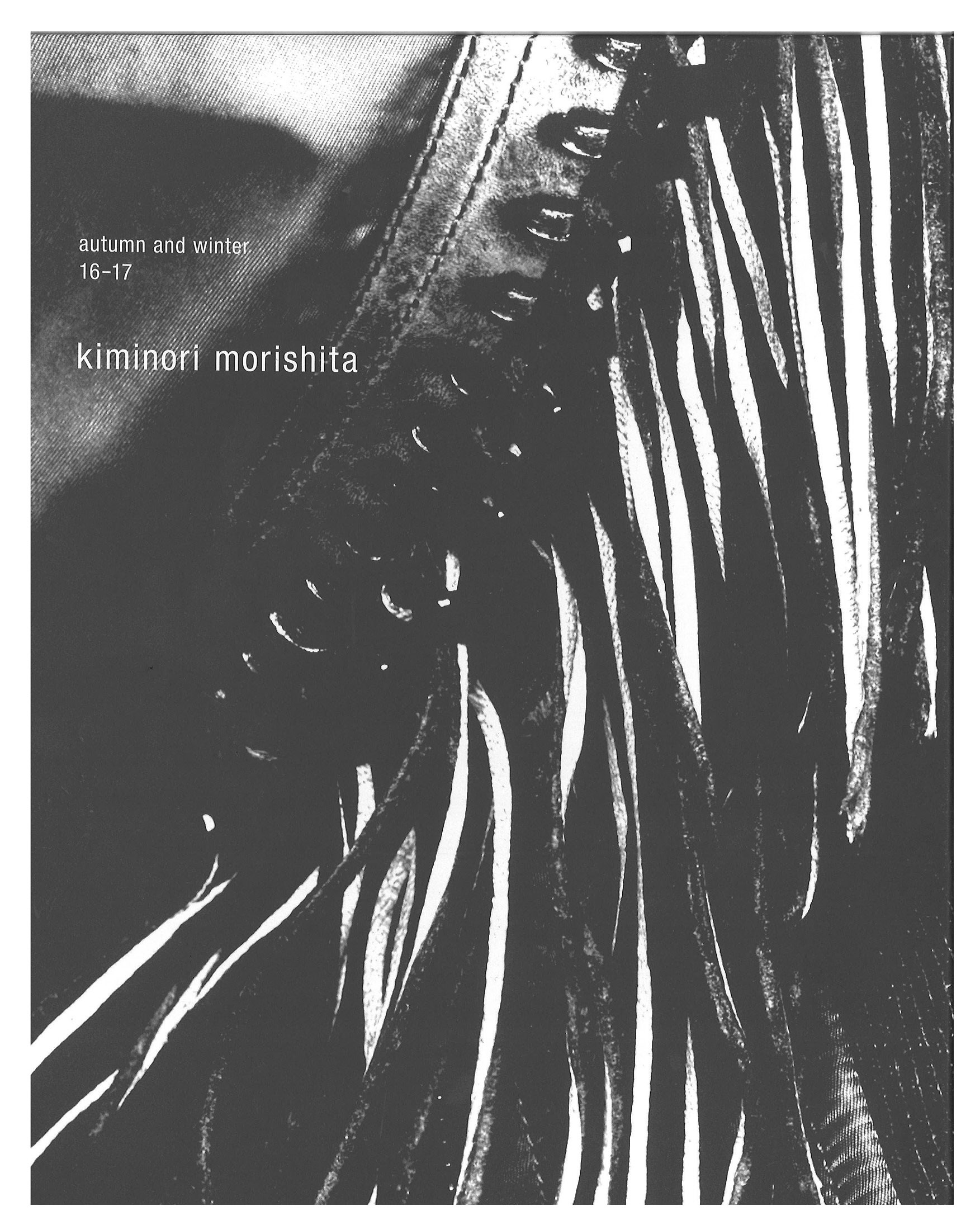
再始動 2016年から2019年
一時休止を経て再始動した頃、それまでとは少し異なる表情を帯びるようになります。“元貴族の物語”から一旦距離を取り、より時代の空気を映し込んだ服作りへと向かっていきました。
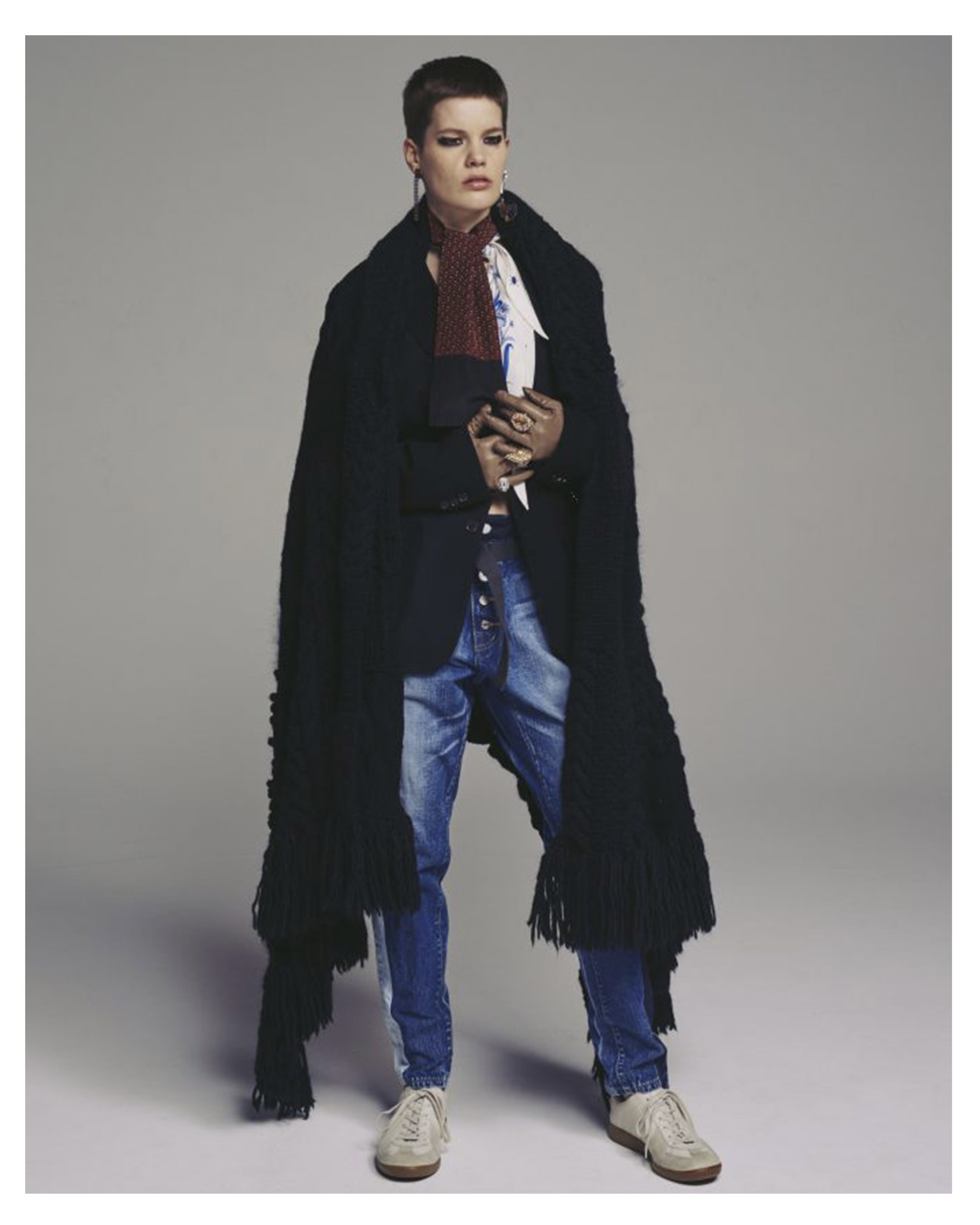
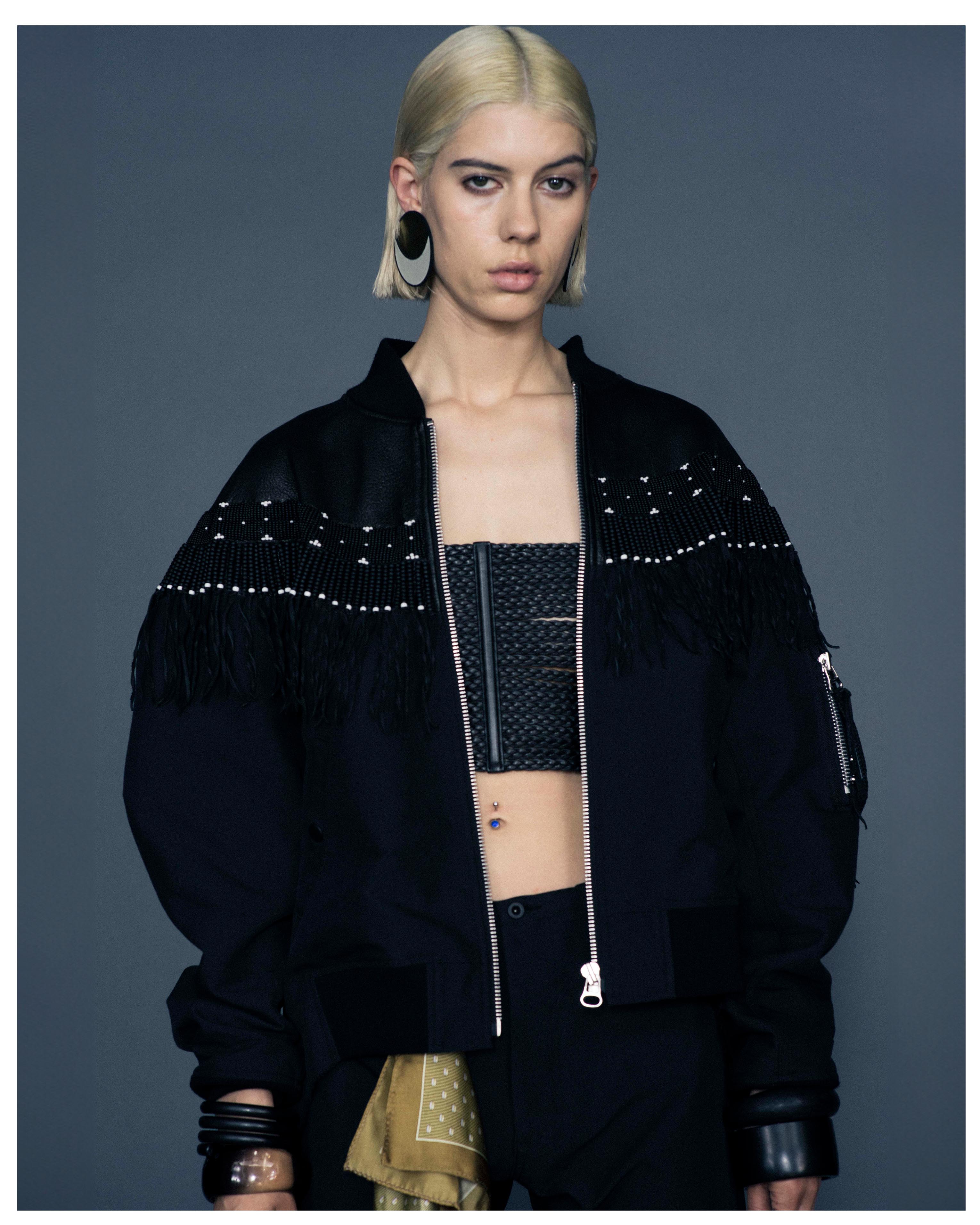
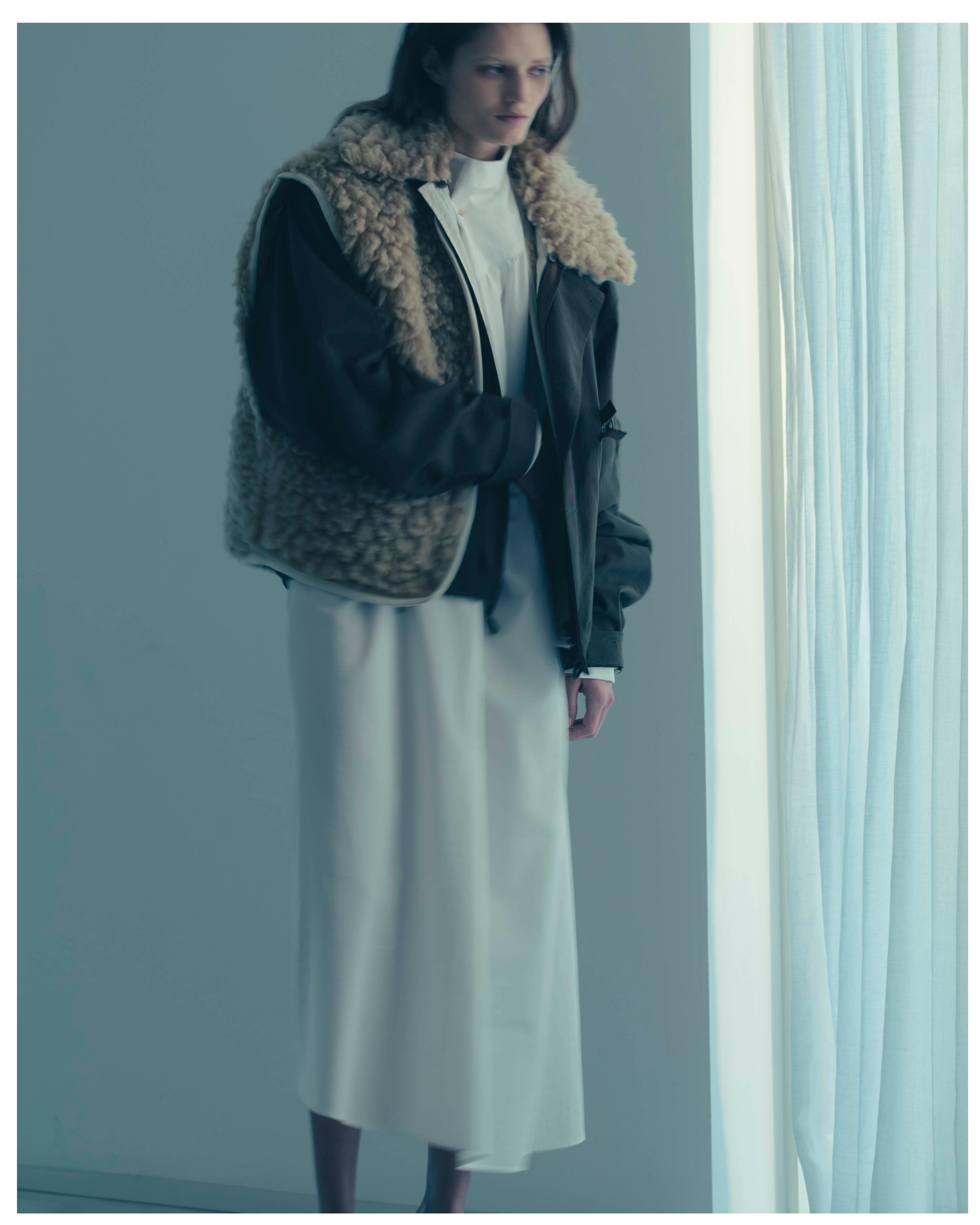
パイロットジャケットは、素材や加工の実験とはまた違うかたちで、服の新しい価値を提示する試みでした。何かをドッキングさせることなく、根本から設計を見直すことで、一着の中に複数の着方や見え方を内包させる。
デニムパンツは、履き込んだデニムを解体し再構築したように、色の濃淡が異なるパーツを組み合わせる。
ミリタリージャケットには、ネイティブアメリカンの要素を掛け合わせる。
過去に培ってきた技術や構造を受け継ぎながら、そこにストリートやジェンダーレスといった時代の気分や新しい感覚を重ねていく姿勢が表れています。
現在 2025年から2026年
そして現在は、さらに深く内に技術や経験を宿し、見た目は静かなものになりました。けれど、中身は濃い。
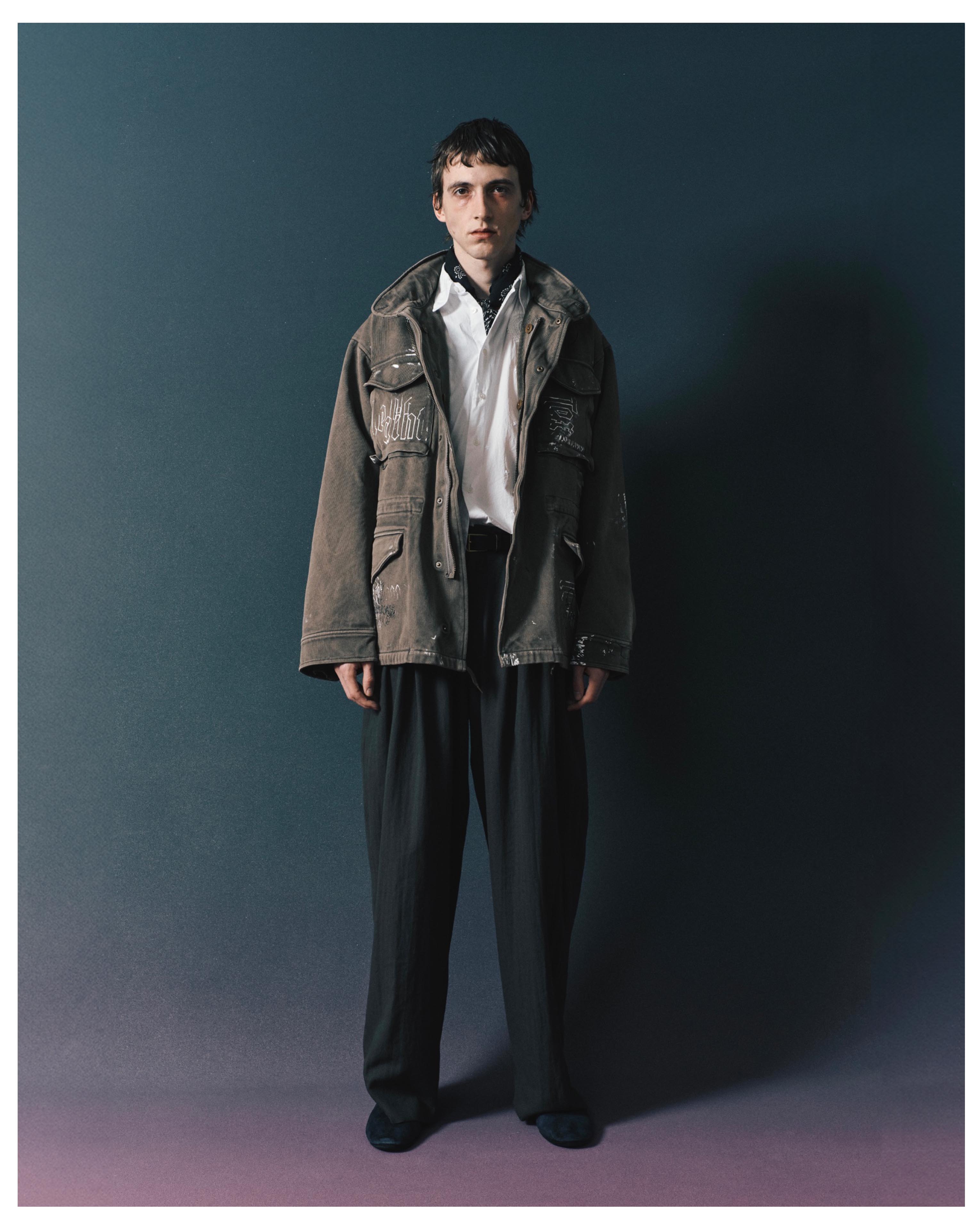
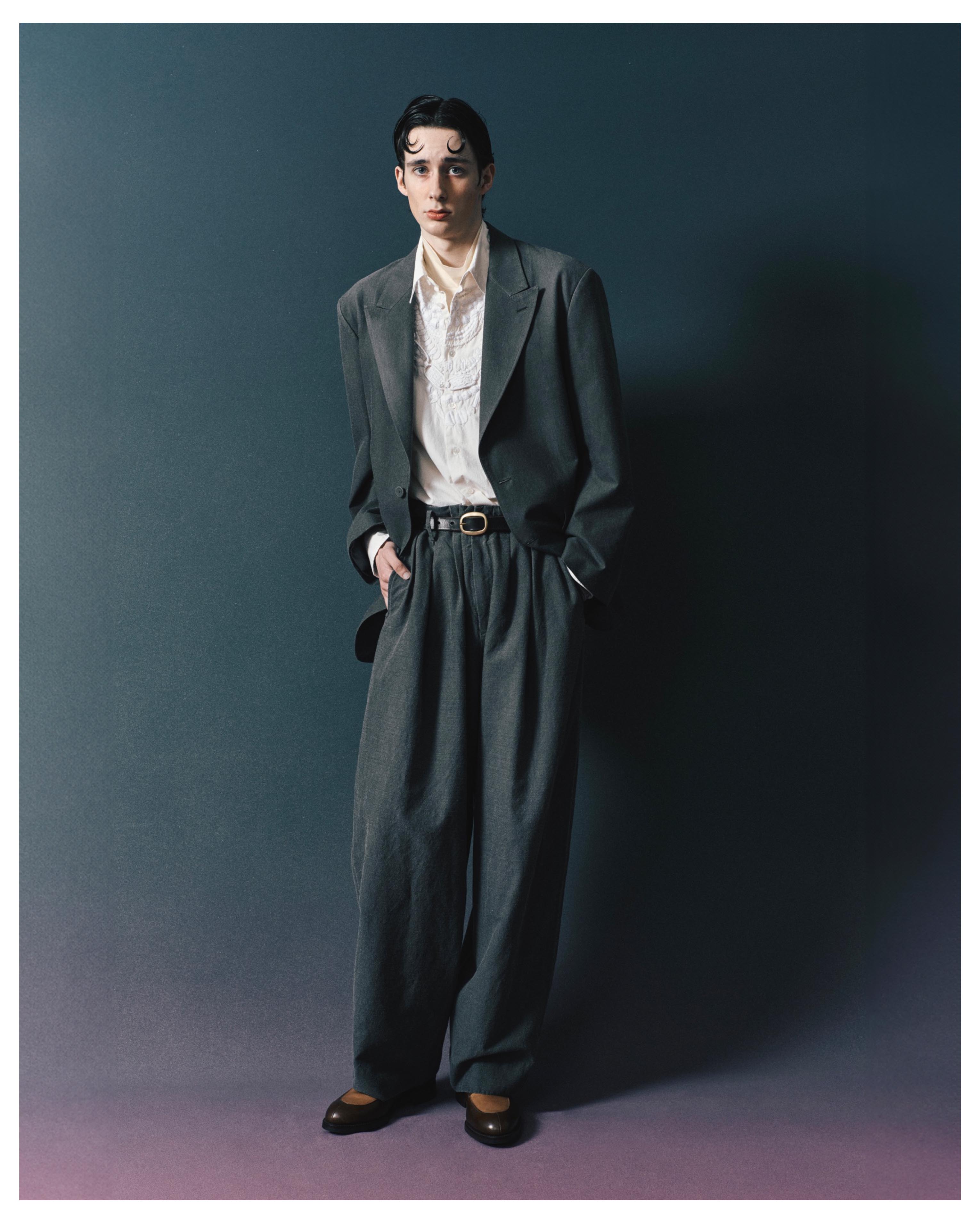
テーラードジャケットには、ベージュのメルトンの上にさらにグレーを重ねたアーカイブの生地の記憶が受け継がれています。
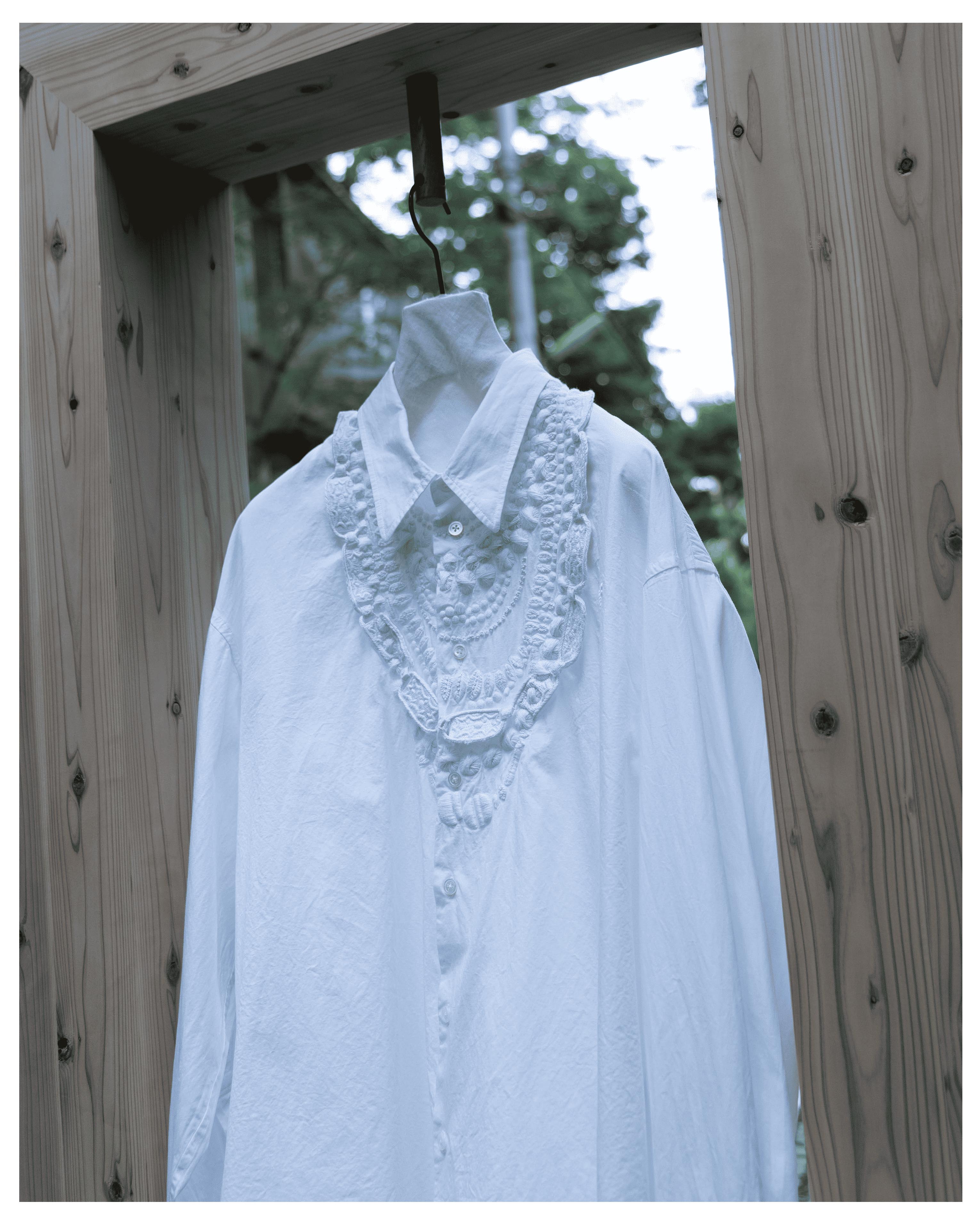
白いシャツには、エスニックな刺繍に塩縮加工を施すことで、より立体的な表情へと更新されました。
デニムジャケットには、チェーンを織り込み、さらに重ねたアーティストのグラフィックが、単なる絵柄ではなく、装飾や加工の延長として自然に溶け込んでいます。
そうした表情を決めるうえで、加工や装飾の“やめ時”を見極めることが、服の輪郭を形づくっています。
都市に溶け込み、人の営みに紛れながら、それでも所有感を抱ける服。今の服には、人間と社会の関係性を布で表現する意識があらためて強く表れています。
ここに並ぶアーカイブの多くは、故・海野英統さんから寄贈していただいたものです。
長い時間をかけて服を見つめ、受け継いでこられたそのまなざしがあったからこそ、こうしていま、この場でブランドの歩みをたどることができます。
私の感性で生み出した服を、感性の合う誰かが手に取っていく。そうした偶然の積み重ねの中で、ファッションデザイナーにできることは、ほんの少し誰かの背中を押すこと。そのくらいなのかもしれません。
ただ、それがとてつもなく誰かの救いになることがある。
だからこそ、自分はこれからも誰かのための一着を作り続けていきたい。そう考えています。
2026.03.17
Designer:
Kiminori Morishita
Direction:
Fuminori Sakai (VISIONS AND PARADOX)
Production / Set design:
Keita Furusawa (VISIONS AND PARADOX)
Writer:
Keiichiro Miyata
Music:
Natsuki Nakajima (MAGNETICA studio)
Photographer:
Hiroki Yamaguchi
Lighting design:
Mitsuhisa Ogaki (MGS LIGHTING)
Lighting operator:
Yoshihiro Yamauchi (MGS LIGHTING)
PR:
M incorporated
Special thanks:
Mitsuharu Uchida (Uchida Dyeing Works)
Archive Donation
Hidemoto Unno (in memory)
YouTube:
2004 spring summer / tokyo
2004-05 autumn winter / tokyo
2008 spring summer / paris
2008-09 autumn winter / paris
2009 spring summer / paris
//////////////////////////////////////////////////////////////////////
kiminori morishita “80 pieces of history”
The garments displayed here are arranged to trace backward through the timeline of Kiminori Morishita. The pieces at the front are the oldest, and as you move further back, they gradually approach the present. How the materials were handled, what hesitations and obsessions accumulated as each piece took form—those very moments in time are what stand before you here.
At the core of the work is a continuous exploration of expressing the relationship between people and society through fabric.Rather than clothing that exists only within specific or limited spaces, the aim is for garments to possess a certain universality—something that could be worn on the subway, blending naturally into the urban landscape like a form of camouflage.
At the same time, the moment it is touched, the passion of the artisans involved in its making can be felt. To realize garments that contain these contradictions, close collaboration with factories has been essential.
This hands-on, production-based approach forms the foundation of Kiminori Morishita’s clothing, shaping a distinctive design language that cannot be replicated.
A closer, slower look reveals the traces of the artisans’ hands and the extraordinary density of the craftsmanship. The reinterpretation of structures rooted in the archive can also be seen evolving across eras, connecting continuously to the present.
Tokyo Era: 2003 to 2005
The early garments presented in Tokyo already contain elements that would later develop throughout the collections.
Contrasting materials, expressions of dyeing and abrasion, complex leather treatments, and even the idea of transforming the fabric itself—these pieces were filled with the exploratory spirit and raw energy of a designer at the beginning of a career.
The intention was to give clothing a new sense of value and perception.
This intention appears vividly in the rider’s jacket composed of five different materials: the coexistence of incompatible suit fabric and leather, exposed seam allowances, a cut-off hem, and a removable fur liner.The amount of effort—and the number of prototypes—far exceeded conventional expectations.
In the melton peacoat, gray is layered over beige and the surface is shaved away. This differs from simply imitating vintage clothing. Instead, it asks why people develop affection for garments that age over time, and why a sense of personal ownership emerges. The piece attempts to interpret that feeling and embed it from the outset. The wooden buttons are individually hand-painted, rubbed, and burned to create charred darkness and irregular signs of age.
In other words, aging is not reproduced—it is intentionally designed.
This philosophy extends to leather jackets as well. They are dyed with fading in mind, allowing only specific areas to lose color and create natural wear. Paraffin is then sprayed onto the surface, placed in a high-temperature steam box, and finally polished by hand.These methods were not originally standard practices in garment making. Through repeated trial and error with artisans—testing which leathers and thicknesses could withstand the processes and whether consistent production was possible—they were developed from scratch.
The denim pants insert a donut-shaped fabric piece beneath the studs, which frays subtly at the edges through washing.
The denim jacket incorporates chains or leather cords woven into the weft threads.
Each of these ideas produces a distinct presence through its unconventional nature.
Shaving. Hammering. Burning. Dyeing. Washing.
Layered with numerous processes, the garments carry visible traces of time while retaining dignity and strength. This contrast defines the signature style of Kiminori Morishita.
Behind this was the image of a character envisioned from the time of the designer’s debut.That image was “the attire of a descendant of nobility.”Well-bred, with a refined sense of beauty. There may have been a time when life carried them away—into alcohol or drugs—but they recovered and now live quietly. The clothes of that era were imagined for such a person.
And that “descendant of nobility” travels each season.To India. To Scandinavia. To Hawaii.What was felt in those places seeped into the collections as defining elements.
Paris Era: 2005 to 2009
As presentations moved to Paris, the previously raw intensity gradually evolved into a more refined presence.
Fabrics and processing were no longer used simply to create a striking impression, but became tools for pursuing a more refined sculptural beauty.
The ethnic embroidery on military jackets was transformed into a distinctive expression through its integration with dyeing and processing techniques. Approaches to dyeing also began to evolve during this period.
A representative example is the spray-treated down jacket. Rather than the earlier idea of removing color, the process intensified tones and introduced artificial shading. By reversing the principle through which traces of time emerge, the notion of “aging” was elevated into a more fashion-oriented expression.
In knit jackets, woven fabrics were bonded through needle-punch techniques, enabling previously difficult forms of construction and expanding the boundaries of design.
The craftsmanship cultivated in Tokyo and the broader worldview developed in Paris began to overlap, deepening the expressive range of the work.At the same time, this period was marked by an exceptionally dense approach to garment making, with fabrics developed for individual pieces and both technical expertise and design applied without restraint.
Restart: 2016 to 2019
Following a period of hiatus and subsequent restart, the work began to take on a slightly different expression. Distancing itself from the earlier “story of a fallen noble,” it shifted toward garments that more directly reflected the atmosphere of the times.
The pilot jacket presented a new kind of value in clothing, distinct from earlier material or processing experiments. By fundamentally rethinking the structure—rather than attaching additional elements—it incorporated multiple ways of wearing and viewing the garment within a single piece.
Denim pants combine panels of varying shades, as though well-worn denim had been deconstructed and reconstructed.
Military jackets incorporate elements inspired by Native American aesthetics.
While inheriting techniques and structural ideas developed in earlier years, the work also layers in contemporary sensibilities such as street culture and genderless aesthetics.
Currently: 2025 to 2026
Today, technical knowledge and experience are more deeply internalized. The outward appearance has become quieter, yet the substance remains rich.
The tailored jacket carries forward the memory of archive fabrics, layering gray over beige melton.
The white shirt updates ethnic embroidery through salt-shrink processing, creating a more dimensional expression.
In the denim jacket, woven chains and layered artist graphics blend naturally into the garment—not as simple imagery, but as extensions of its decorative and processing techniques.
In shaping these expressions, knowing precisely when to stop processing or embellishment becomes what ultimately defines the garment’s form.
Garments that blend into the city and merge with everyday human activity, yet still evoke a sense of personal ownership. In the current work, the intention to express the relationship between people and society through fabric appears once again with renewed clarity.
Many of the archives presented here were donated by the late Hidetoshi Unno.
It is thanks to the perspective of someone who spent many years observing and preserving these garments that the brand’s journey can now be traced in this space.
Garments created through a particular sensibility eventually find their way to someone whose sensibility resonates with them. Within these accumulations of chance encounters, what a fashion designer can do may simply be to give someone a small push forward.
Yet at times, that small push can become an immense source of salvation for someone.
For that reason, the desire remains to continue creating garments for someone.
2026.03.17
Designer:
Kiminori Morishita
Direction:
Fuminori Sakai (VISIONS AND PARADOX)
Production / Set design:
Keita Furusawa (VISIONS AND PARADOX)
Writer:
Keiichiro Miyata
Music:
Natsuki Nakajima (MAGNETICA studio)
Photographer:
Hiroki Yamaguchi
Lighting design:
Mitsuhisa Ogaki (MGS LIGHTING)
Lighting operator:
Yoshihiro Yamauchi (MGS LIGHTING)
PR:
M incorporated
Special thanks:
Mitsuharu Uchida (Uchida Dyeing Works)
Archive Donation
Hidemoto Unno (in memory)
YouTube:
2004 spring summer / tokyo
2004-05 autumn winter / tokyo
2008 spring summer / paris
2008-09 autumn winter / paris
2009 spring summer / paris